French police questions parents and friend of Paris suspect
 The Associated Press
A judicial official says investigators are still questioning the parents
and a friend of the man who attacked passers-by with a knife in a
central Paris neighborhood.
The 20-year-old Frenchman, born in the Russian republic of Chechnya,
killed one person and wounded four others in Saturday attack, before
police fatally shot him. The Islamic State group claimed responsibility.
Khamzat Azimov's parents and a friend from the eastern city of Strasbourg were being detained by police.
The official said Monday the suspect was living in the northern 18th
district of Paris with his family, which had previously lived in
Strasbourg.
The official wasn't authorized to speak publicly on the ongoing investigation.
Counterterrorism investigators want to know if the assailant had help or co-conspirators.
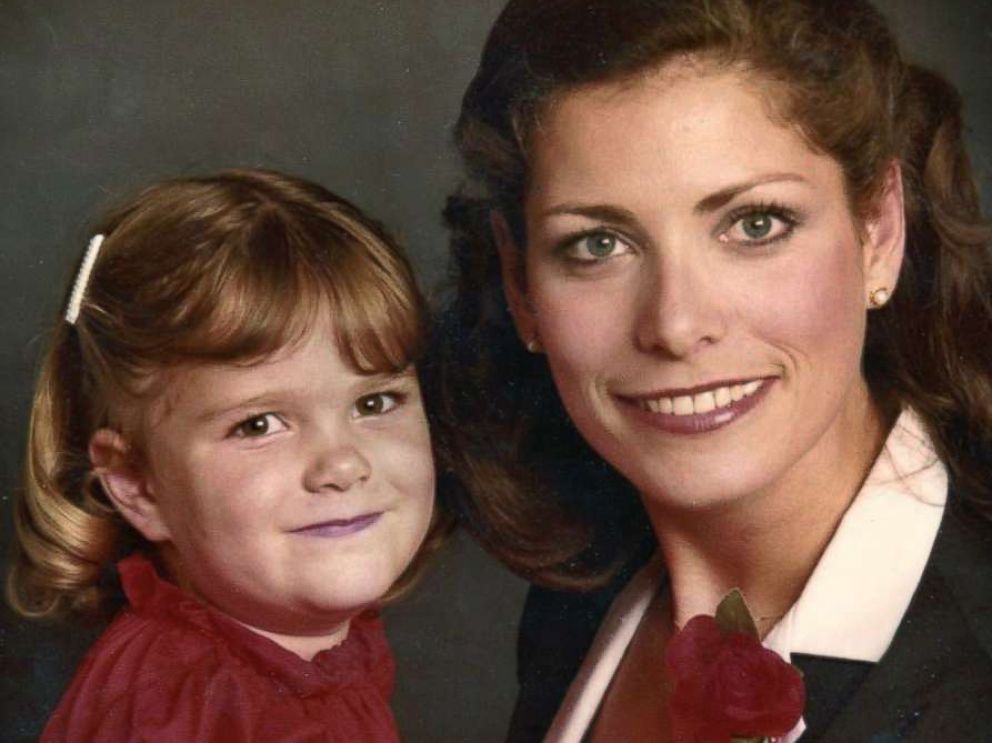
Karolyn Nunnallee had just gotten back from church when she got the news.
Her 10-year-old daughter Patty, was in a bus crash coming back from a church-arranged trip to an amusement park.
"My husband called and asked me where were Patty's dental records. My
logical mind knew you don't just ask for dental records if there were
survivors," Nunnallee told ABC News.
What she didn't know yet was that the Carrollton bus crash on May 14,
1988, was the deadliest drunk-driving accident in U.S. history. It still
holds that record today.
The violent collision on an interstate outside Carrollton, Kentucky,
killed 27 people -- 24 of them children -- and injured 34 others.
It spawned an array of new regulations for buses and, perhaps more
importantly, raised awareness of the dangers of drunk driving and helped
to spur a lowering of the legal threshold for blood-alcohol content
across the country.
But now 30 years after the crash, some survivors lament that there weren't still more changes to deter drunk driving.
“I know lives have been saved, but sadly too many have been lost,” Nunnallee said.
 Courtesy Karolyn Nunnallee
Among those lost in the years since was the son of a man killed in the
Carrollton bus crash. Charlie Kytta died in an auto collision with an
impaired driver just as his father, Chuck Kytta, had in the
drunk-driving bus accident years before.
Charlie’s mother, Janet Kytta Hancock, said her son’s death left her with the same feeling as when her husband died.
“It’s maddening because it didn’t have to happen,” Kytta Hancock said.
The Carrollton crash
The crash occurred around 11 p.m. when a drunk driver in a pickup truck was traveling on the wrong side of the interstate and slammed into the oncoming school bus.
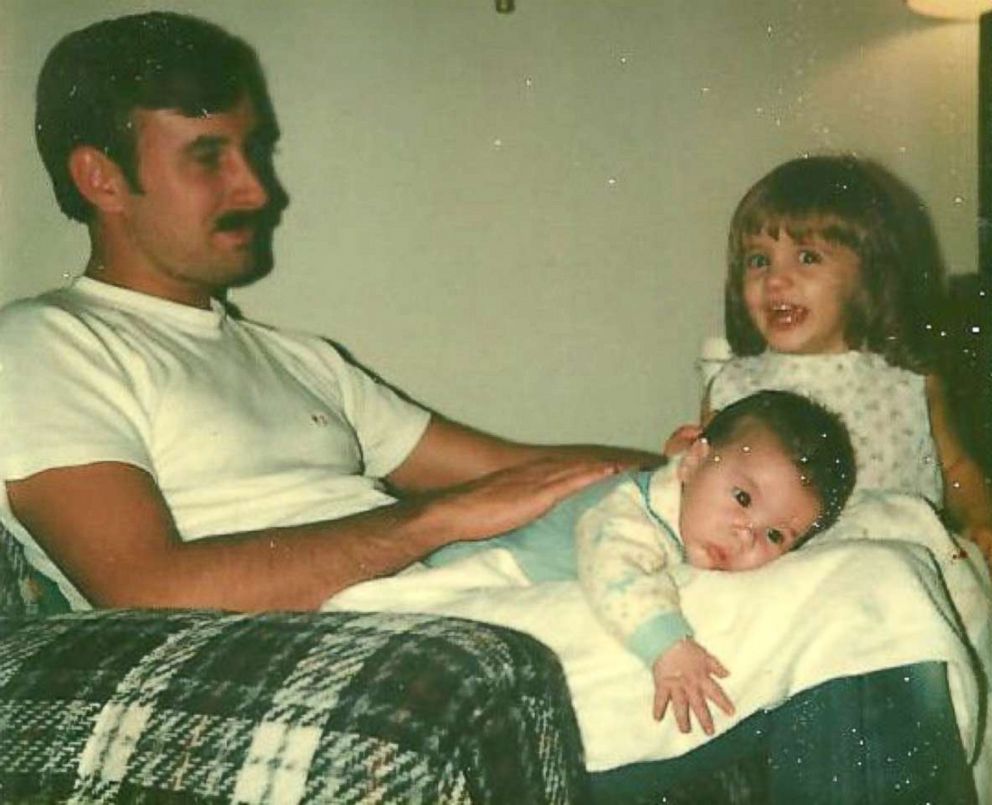
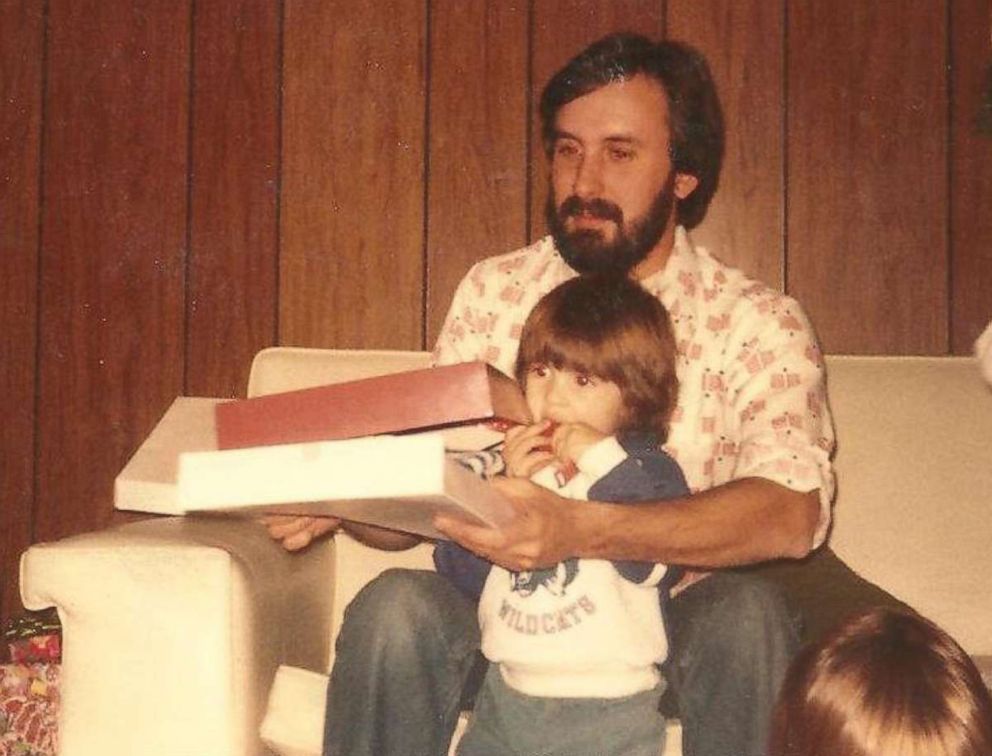
Ten-year-old Patty Nunnallee was among the 24 children killed, and Chuck
Kytta, one of the chaperones on the trip, was one of three adults who
died.
 Courtesy of Janet Kytta Hancock
 Courtesy of Janet Kytta Hancock
His wife, Janet Kytta Hancock, said she later learned that he had been
standing in the stairwell at the front of the bus when the crash
happened, and he burned to death.
At first, when she arrived at the First Assembly of God Church that
night after receiving a call about a problem with the bus, there were
lists of names posted that divided up the passengers into injured and
missing. Her husband’s name was on the missing list.
“I couldn’t figure out why he would be missing. He was an adult, he had a
wallet,” she said. “The fire was so fast, and it was so hot that Chuck
actually burned to death. He didn’t die of smoke inhalation. It was
horrible. It was just unimaginable.”
Don Karol, a senior highway accident investigator with the National Transportation Safety Board,
told ABC News that he believes that no one died as a direct result of
the collision, but rather from the fire and smoke inhalation in the
aftermath.
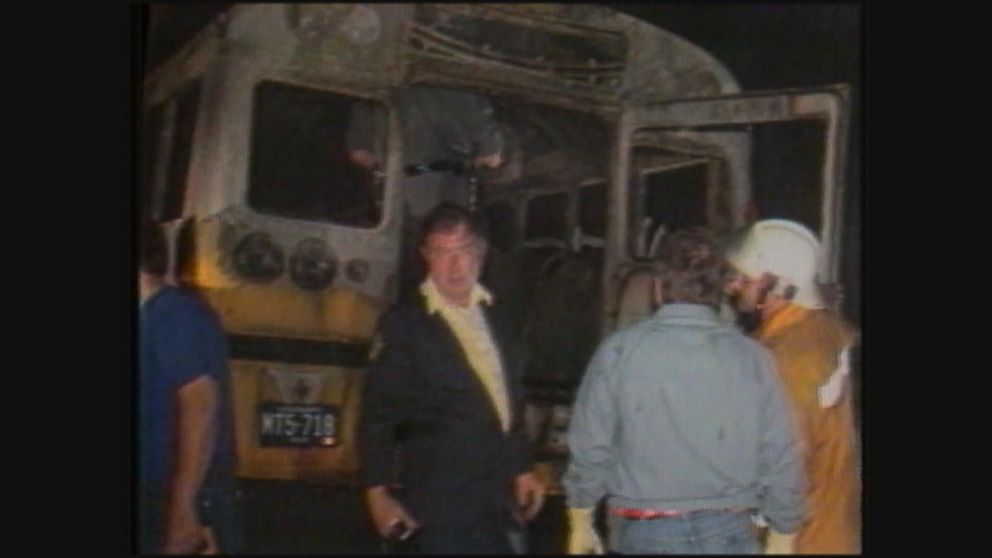
The truck "hit the bus in the right front, and it was enough to
basically damage the suspension, and the whole front end of the bus got
pushed rearward ... The fuel tank that is right behind that area got
punctured," Karol said.
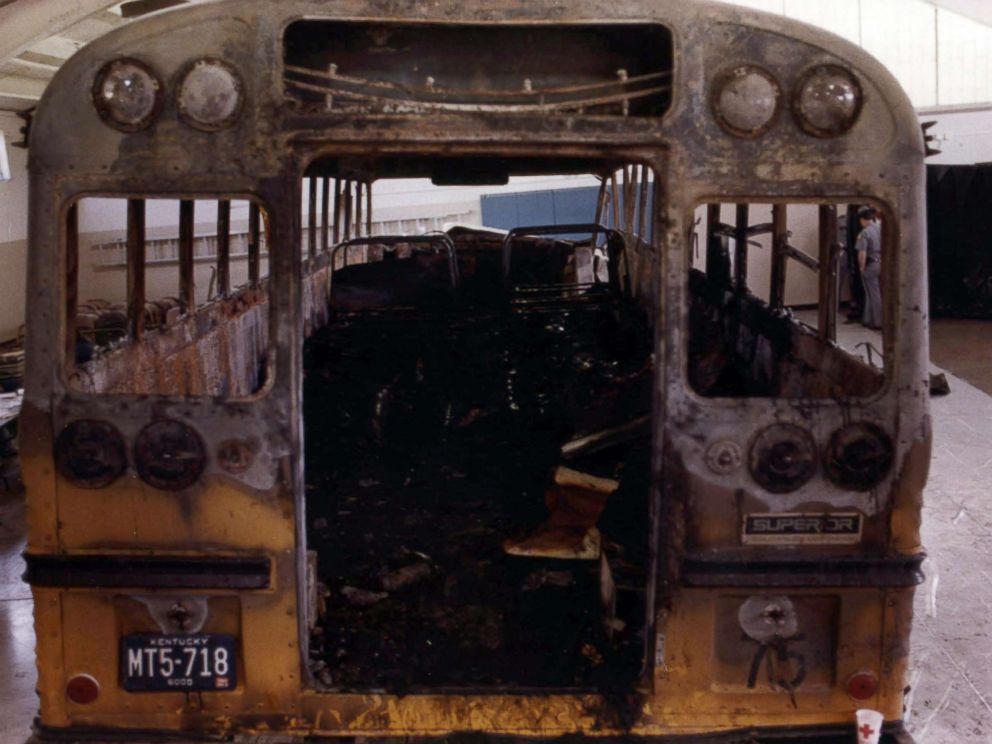
The bus was filled to capacity, Karol said, with 66 passengers and a
driver, and because the front exit was inaccessible due to the crash,
all 67 adults and children were trying to get out of the one rear exit.
 Ed Reinke/AP, FILE
That one rear exit was partially blocked by coolers that had been pushed
toward the back of the bus, which Karol said "exacerbated the problem."
The layout of seats was also a factor, as the bus's "very wide" rows of
seats left only left 12 inches for the aisle, Karol said.
Two other safety issues that reared their dangerous heads that night
were a lack of guard frames around the fuel tank, which could have
prevented it from being punctured in the crash, and the toxic, highly
flammable material in the bus seats.
Autopsy reports showed Patty Nunnallee had certain toxins in her system
which indicated she was the last one to die, her mother said.
"I was honestly hoping that the immense heat would have killed her
instantly," Nunnallee said. "But the autopsy showed that because of the
gas in her blood ... she had to have breathed it in and she was the only
one" to have such toxins in her system.
The drunk driver
 Ed Reinke/AP, FILE
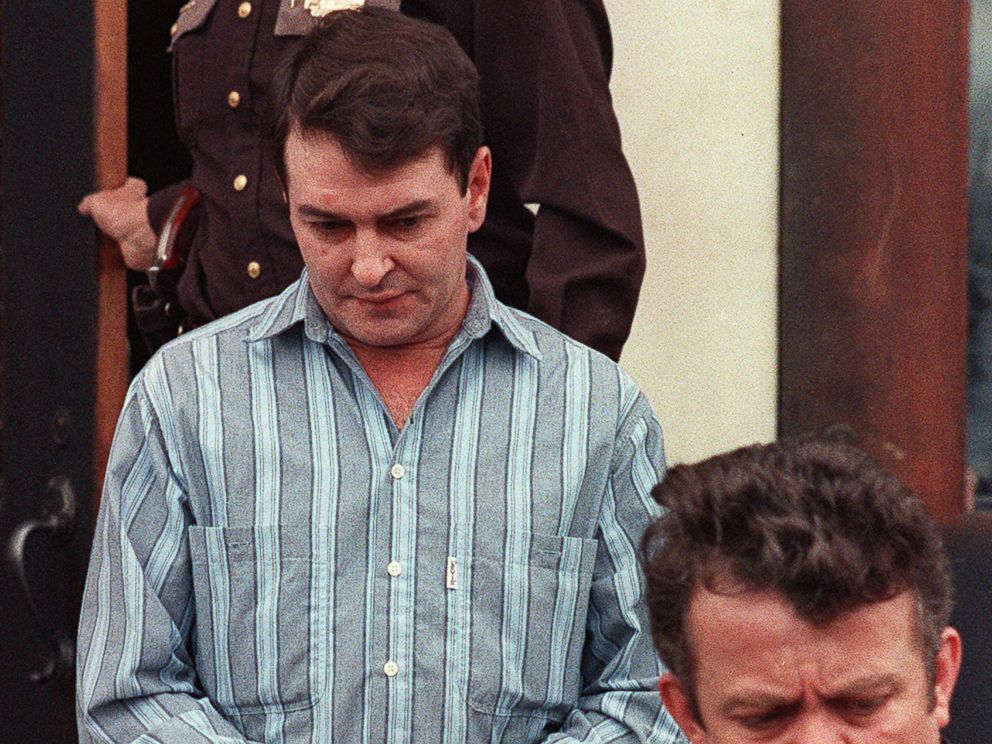
The pickup truck driver, Larry Mahoney, then 34, had a blood-alcohol
level of 0.24 percent at the time of the crash, significantly above the
0.10 percent legal limit at the time in Kentucky.
He was convicted of 27 counts of second-degree manslaughter, 16 counts
of second-degree assault and 27 counts of wanton endangerment, prompting
a sentence of 16 years in prison.
According to a 2003 Cincinnati Enquirer article
from the 15th anniversary of the crash, Mahoney was described as a
model prisoner and had more than five years taken off his sentence due
to good behavior. The paper reported he left Kentucky State Reformatory
in September 1999 and has lived a quiet, isolated life ever since, never
speaking publicly about the crash.
A call to action
 Tim Sharp/AP, FILE
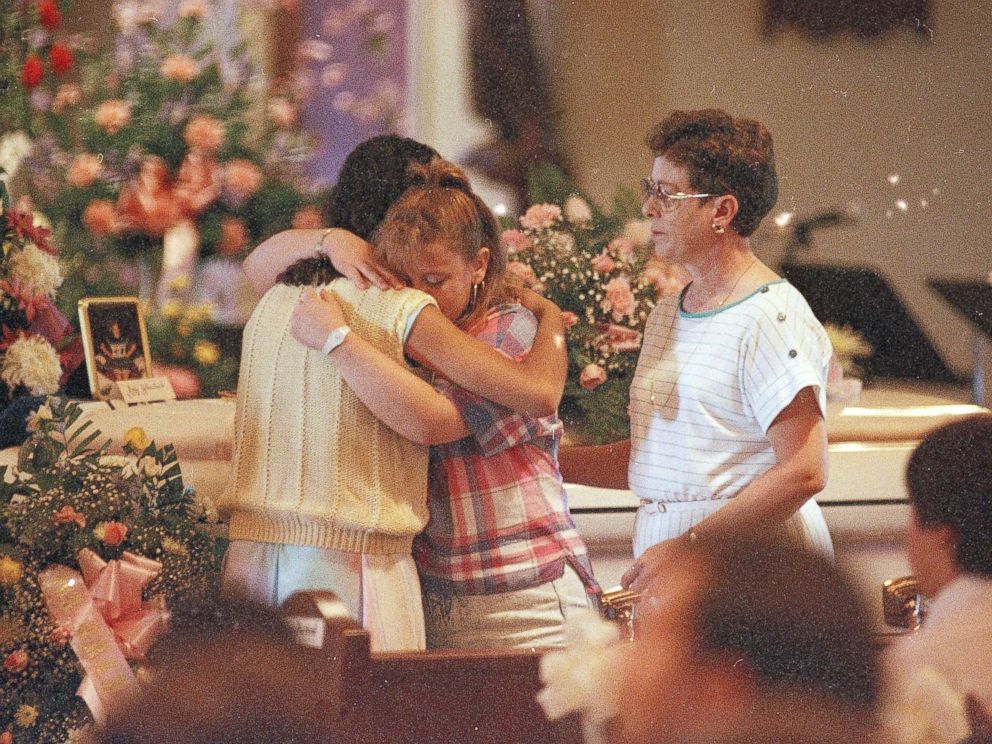
The children and adults on the bus that day either belonged to or were
friends of members of the First Assembly of God Church in Radcliff,
Kentucky.
The crash rocked the town and reverberated at nearby Fort Knox, as many
of the victims, including Patty Nunnallee, came from military families
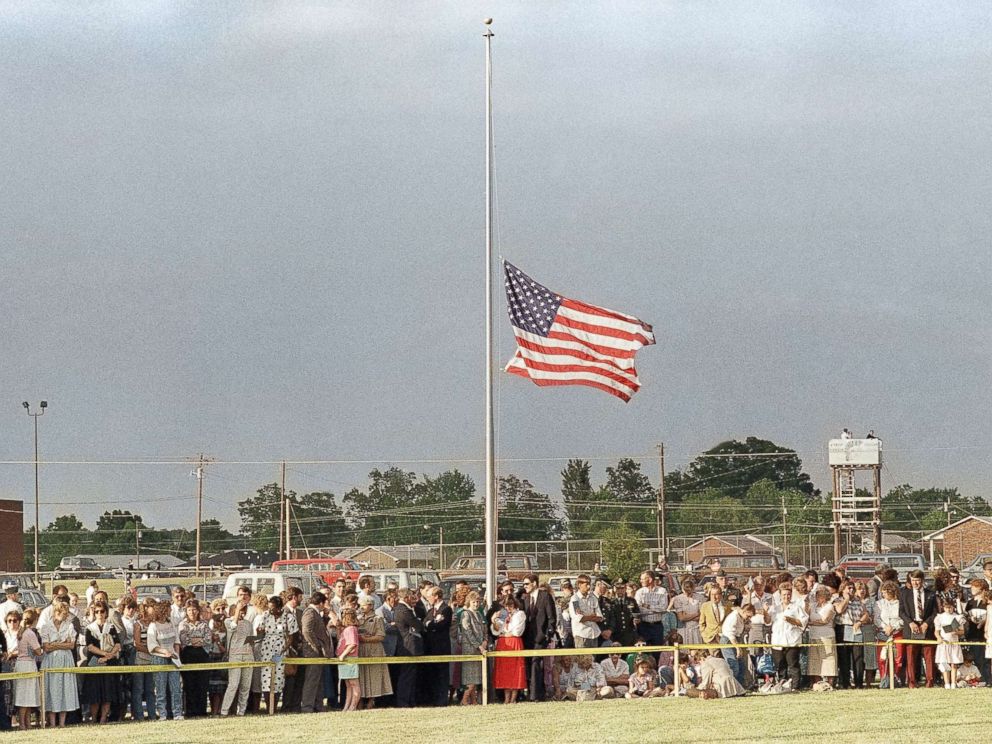
stationed there. A memorial service days after the crash at a football
stadium drew thousands of mourners.
 Ed Reinke/AP, FILE
Karolyn Nunnallee quickly found activism as a route through her grief.
“I started my work in MADD [Mothers Against Drunk Driving] two weeks
after the crash. I just knew I had to do something,” she said.
She started working with the group on the state level and continued
working with MADD even as she and her family moved across the country.
She eventually became a member of the national board and then president
of the group from 1998 to 1999.
Change followed
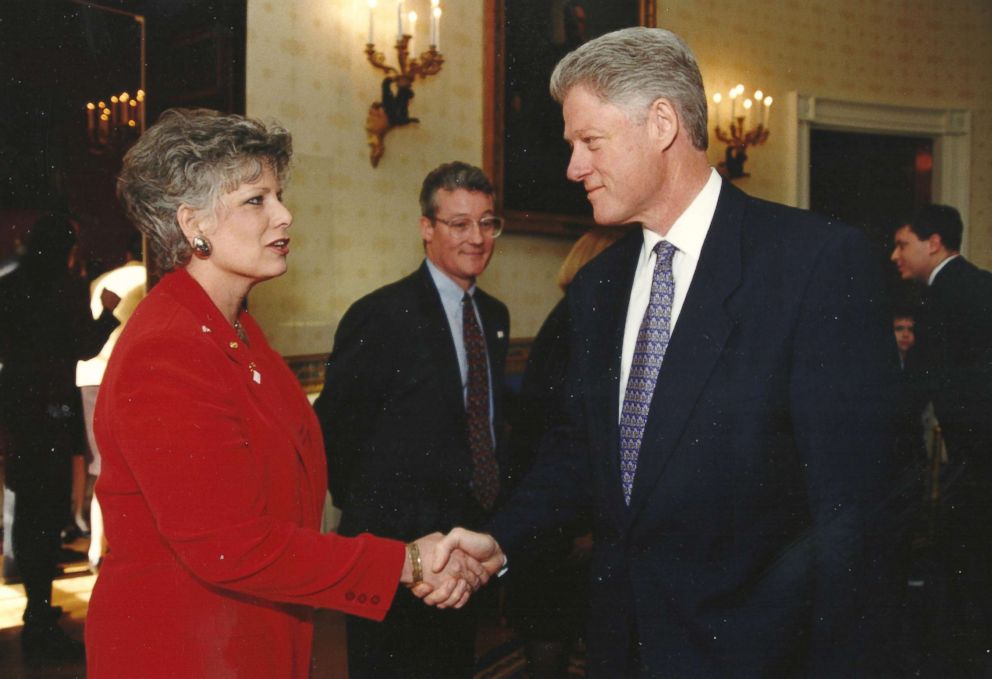 White House via Karolyn Nunnallee
After the Carrollton crash, bus safety standards were heightened and anti-drunk driving initiatives progressed.
School buses now have better-protected fuel tanks; many more exits
including emergency exits and windows that double as exits; less
flammable seat materials; and wider aisles, Karol from the NTSB said.
The biggest impact though came from "all of the attention that was paid
to alcohol-impaired driving,” he said. It “spurred legislation,
education, and awareness.”
The most notable change was the lowering of legal blood-alcohol levels,
first on a state-by-state basis, then by 2004, a 0.08 blood-alcohol
limit was adopted in all 50 states, according to MADD.
The number of deaths from drunk drivers has fallen sharply, from more
than 18,000 alcohol-related driving fatalities in 1988 to more than
10,000 in 2016, according to the National Highway Traffic and Safety
Administration,
The decreases were not enough for Nunnallee, however, as she remembered
having a tinge of regret when her term as MADD president was over in
1999.
“I honestly thought that I, Karolyn Nunnallee, would stop drunk driving. That was my thought,” she told ABC News.
“I look back in the last 30 years — 375,000 have been killed in the last
30 years, and if that had happened in a one-time incident our nation
would be in a total uproar. We probably would take all the cars off the
road,” Nunnallee said.
“If it were up to me, they would quit selling alcohol and they wouldn’t
allow anyone to get behind the wheel with anything [in their system],”
she said.
For some, more personal tragedy
Kytta Hancock said that when she lost her husband in the Carrollton
crash, “at the time I couldn’t imagine what it was like to lose a
child.”
She and her children, Mandy and Charlie, 11 and 9 years old respectively
at the time of their father’s death, moved to Oklahoma and carried on
with their lives. She remarried, and eventually her children married
too.
But 22 years after the Carrollton crash, in 2010, her son, Charlie, was
also allegedly killed as he was on his way to work by an impaired
driver. The driver later pleaded guilty to manslaughter and was
sentenced to 10 years in prison.
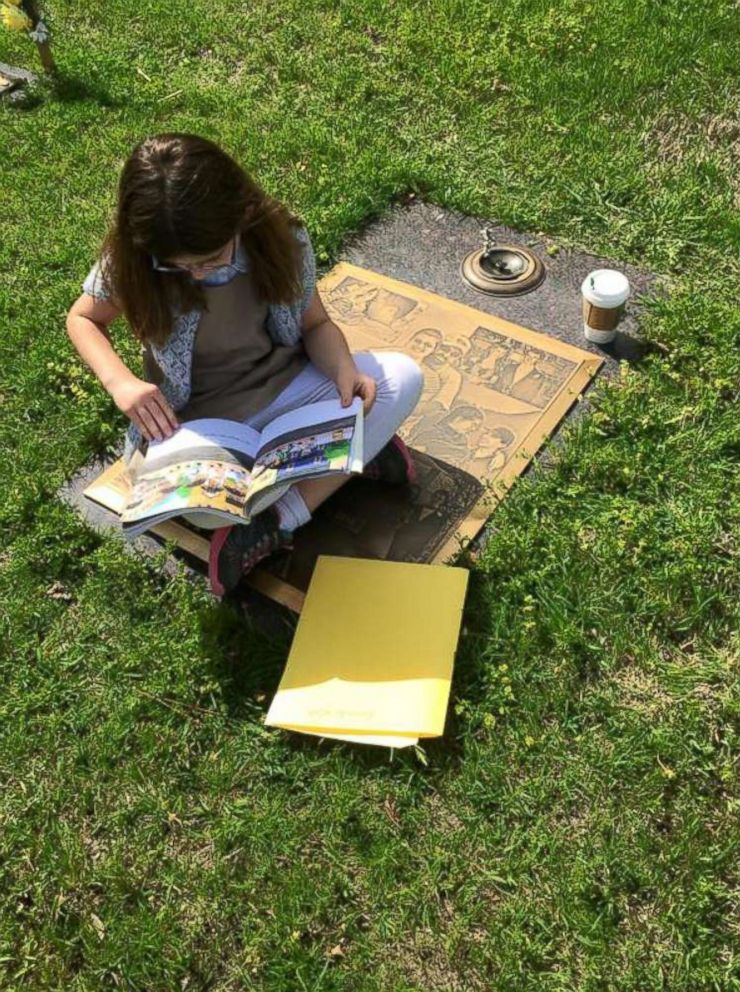 Courtesy of Janet Kytta Hancock
“I had lost my husband and that was awful and my husband was somebody's
child — I had to tell his mom and his dad that he was dead and it was
incredibly hard but it wasn’t until what it happened with me years later
with Charlie," Kytta Hancock said. "It was that same emotion inside of
me, and it was even harder for me because I know it takes years to
recover when you lose someone in such a tragic way.”
Kytta Hancock said she wants drivers to think more about the people they may be putting at risk.
“I don’t think they ever thought that it could happen to them,” she said
of the driver in the Carrollton crash and the man whose car collided
with her son's.
But drivers are not the only ones at fault, as friends need to help stop
others from driving impaired, Kytta Hancock said. “We have to intervene
when we see it happening,” she said.
She echoed Nunnallee, saying that while progress has been made, it’s not enough.
“As the years have gone on, I thought that things would really change
but there still is a real problem,” she said. “It has been 30 years but I
don’t know that something really horrible like that couldn’t happen
again.”





















0 Comments:
Post a Comment